
AI in Pharma Sales · Part 2 of 2
The AI Pharma Field Rep Playbook (Part II)
A practical playbook for implementing AI pharma sales training: a 90-day quick-start, a hub-and-spoke data architecture, and an MVP for pre-call prep.
In Part I, I established the "why": why traditional pharma sales training is broken. Now, we move on to the "how": a concrete plan for implementing AI pharma sales training without boiling the ocean.
Remember when I discussed Fixing Healthcare Fragmentation, and how disconnected systems cost the pharma industry billions in inefficiencies? That problem painfully echoes inside the field force. Knowledge is trapped in PowerPoints, the latest data is hard to get to, and reps are forced to manually update multiple systems with the same customer data. When they actually need an insight for a critical HCP conversation, they're told to raise a support ticket and wait days for their analyst. The pace is glacial, and that simply isn't good enough anymore.
The Hub-and-Spoke Architecture
The technical solution requires moving beyond scattered spreadsheets and siloed systems, adopting a modern "hub-and-spoke" data architecture. This means creating a central data "hub" by using platforms like Snowflake's AI Data Cloud or Databricks' Lakehouse that connects and unifies your commercial systems from CRMs like Veeva Systems and Salesforce to marketing automation platforms, and even legacy spreadsheets (Veeva Systems, 2023). The specific platforms matter less than the problem you're solving. As Gartner (2024) notes, "The best technology poorly implemented will always lose to adequate technology excellently executed." Using API-led connectivity to link spokes to this central hub is the only way to make real-time AI analysis a reality, forming the pipeline (automated and efficient!) backbone of the entire system.
The 90-Day Quick-Start Framework
Your first step is to build a small, agile "coalition of the willing." You need three key people: a Sales Leader who feels the pain of missed targets, a Training Manager frustrated with low engagement, and a Digital Champion from IT or a Center of Excellence who can navigate the technical landscape. This cross-functional structure is proven to increase project success rates by over 65% (McKinsey & Company, 2024).
Weeks 1-2: Build a "coalition of the willing" and document the main pain point and use case for the project.
Day 1: Initiate Contact. Send a targeted email to your potential sales and training leaders: "I have an idea that could reduce meeting prep time by 50% and improve conversation quality. Can we discuss this week?" This frames the initiative around value, not technology.
Day 2-3: Schedule three 30-minute discovery calls. Resist the temptation to solve everything. Good areas to focus on are underperforming product launches, an established product facing competitive threat, or high-potential product with lowest market share.
- Top performer: "What takes most of your prep time?"
- Average performer: "What would make you more confident in competitive situations?"
- Training manager: "Where do reps struggle most with product knowledge?"
Day 4: Document the Use Case. Synthesise the feedback from your discovery calls into ONE specific, tangible use case. For example: "Our reps lack confidence in handling objections to Competitor X's new data, impacting Q3 performance." Define ONE specific pain point.
By End of Week 2: Deliver the One-Page Proposal. Present your coalition with a compelling one-page proposal containing:
- The clear problem statement with its business impact.
- The proposed AI-powered solution.
- The 90-day pilot plan with clear milestones.
- Success metrics and your measurement approach.
Weeks 3-4: Pilot Selection & Compliance Framework
Select a pilot team of 10-15 representatives, mixing high and average performers to capture a full range of insights. To maximize impact, focus the pilot on a high-value, complex product and a critical use case. While competitive differentiation is a proven starting point (Accenture, 2024), ensuring Launch Excellence for an upcoming product offers the most significant strategic value, as recent analysis shows GenAI can accelerate launch readiness by over 20% (Deloitte, 2025).
At this stage, engage your legal, medical, and regulatory (MLR) partners to establish the data governance and compliance framework. This isn't bureaucracy; it's your licence to operate and scale responsibly.
Weeks 5-8: Build Your MVP (Minimum Viable Product)
This is where strategy becomes software. Your goal is to deliver the AI-powered 10-Minute Pre-Call Blueprint via a seamless, one-click workflow integrated directly into your existing CRM.
Step 1: Build the Foundational Content Library. The AI can only recommend content that doesn't exist. The first step is to create a foundational library of micro-learning "nuggets" for your pilot's therapeutic area. This involves deconstructing existing, MLR-approved materials (e.g., slide decks, clinical trial PDFs, brand plans) into focused, single-topic modules. Each module should be tagged with metadata to make it discoverable by the AI.
For an MVP, the content library for a single therapeutic area should include:
- Disease State Overview: Short videos or infographics explaining the epidemiology, pathophysiology, and diagnosis of the condition.
- Mechanism of Action (MOA): Animated videos or interactive diagrams detailing how key drugs work at a cellular or molecular level.
- Clinical Trial Summaries: Concise, one-page summaries or data visualisations of pivotal clinical trials, highlighting study design, key efficacy endpoints, and safety results.
- Product Information: "Digital flashcards" covering essential product details like dosing, administration, contraindications, and key formulary access information.
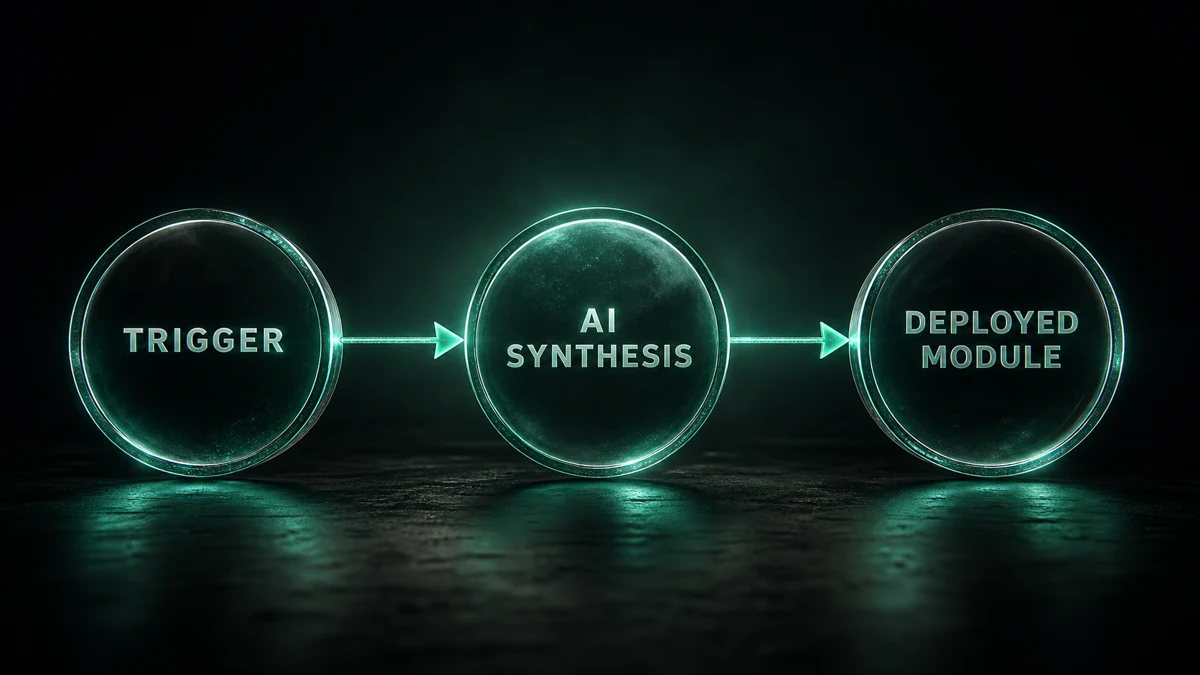
Step 2: Configure the AI Recommendation Engine & Deploy the MVP. With the content library in place, you can configure the AI to deliver the 10-Minute Pre-Call Blueprint.
The MVP Workflow:
- The Trigger: A rep sees a meeting with an HCP in their CRM calendar. Next to it is a single button: "Prepare Call." They click it.
- The AI Synthesis: The AI analyses the context of the meeting (e.g., HCP specialty, prescribing history of Competitor X, past objections logged in the CRM) and translates it into a query for the content library.
- The Deployed Module: The AI recommendation engine selects the most relevant "nuggets" from the library and assembles them into a personalised, 3-5 minute pre-call module that populates the blueprint on the rep's device.
This two-step process, creating a tagged library and using AI to assemble personalised learning paths from it, is the practical, compliant, and scalable way to bring the promise of AI-powered sales training to life. Modern platforms like Dotcom or Quortz already used by top pharma companies, can deploy these targeted modules in weeks, not years.
Weeks 9-12: Measure and Scale
Track a mix of leading and lagging indicators to prove ROI and build the business case for expansion.
- Leading Indicators (Adoption & Capability): Rep confidence scores, Conversation Quality Scores (measured via call coaching tools), and reduction in Preparation Time.
- Lagging Indicators (Business Impact): Increased Win Rate on competitive accounts, faster Sales Cycle Length, and, most importantly, Quota Attainment for the pilot group vs. a control.
A 2025 analysis of GenAI's impact on commercial pharma confirmed that early adopters are seeing a 10-15% increase in sales effectiveness within the first year of deployment (Accenture, 2025). One global pharmaceutical company achieved 25% faster time-to-market for new product launches after upskilling 1,200+ sales representatives through AI-powered training (Master-O, 2024).
The Human-First Change Management Playbook
The best tech fails without adoption. Use the "Skeptic Strategy": find a respected, veteran rep who is skeptical of new tech. Ask them, "If AI could answer any question for you before a call, what would it be?" Make their answer your first use case. When they become an advocate because the tool helps them win, peer-to-peer adoption will follow, a method proven to be highly effective by leveraging social proof and influence networks to overcome resistance.
Then → Now: the pace caught up with the playbook
When I first published this in 2025, the AI-powered "Prepare Call" button was a bold pilot: most field teams were still raising support tickets and waiting days for an analyst. Eighteen months later, in 2026, that same capability has gone from differentiator to baseline expectation. The content library that took weeks to assemble can now be drafted by the model itself and routed straight into MLR review; the recommendation engine that needed careful configuration now reasons over the CRM context out of the box. The exponential curve I kept pointing at is no longer a forecast: it's the operating reality. The 90-day framework below still holds, but the bar for "good enough" has moved, and it will keep moving. The teams that built the muscle early are the ones now compounding the advantage.
The Investment Reality Check
The business case is clear. Recent analyses project that GenAI can unlock $60 billion to $110 billion in value for the pharmaceutical industry annually, with a significant portion coming from commercial and marketing applications like the one described here (McKinsey & Company, 2025).
What's your Monday move now?
An earlier version of this article first appeared on LinkedIn.
References
- Accenture. (2025). Pulse of Change: 2025 Technology Vision for Life Sciences. https://www.accenture.com/us-en/insights/life-sciences/technology-vision
- Bain & Company. (2025). How Generative AI Is Turbocharging B2B Sales. https://www.bain.com/insights/how-generative-ai-is-turbocharging-b2b-sales/
- Deloitte. (2025). 2025 Life Sciences Industry Outlook. https://www2.deloitte.com/us/en/pages/life-sciences-and-health-care/articles/life-sciences-industry-outlook.html
- Gartner. (2024). How a Global Pharma Company Achieved 25% Faster Time-to-Market. https://www.masterapp.com/case-studies/global-pharma-company-25-readiness
- McKinsey & Company. (2024). What's the future of generative AI in the pharmaceutical industry? https://www.mckinsey.com/industries/life-sciences/our-insights/whats-the-future-of-generative-ai-in-the-pharmaceutical-industry
- McKinsey & Company. (2025). Generative AI in the pharmaceutical industry: Moving from hype to reality. https://www.mckinsey.com/industries/life-sciences/our-insights/generative-ai-in-the-pharmaceutical-industry-moving-from-hype-to-reality
- Veeva Systems. (2023). Veeva and Databricks Partner to Accelerate AI and Analytics for Life Sciences. https://www.veeva.com/resources/veeva-and-databricks-partner-to-accelerate-ai-and-analytics-for-life-sciences/

Written by
Frank Eisenlohr
Founder, Digital4Health · Digital Health & Pharma Consultant
Frank Eisenlohr brings 20+ years in healthcare digital transformation — advising hospitals, pharma and medtech, and building privacy-by-design platforms like a Swiss e-prescription system.
AI in Pharma Sales · 2/2
Related services
Turn these ideas into a working system.
This is the thinking behind my AI Sales Enablement for Pharma work — or book a potential check to talk it through.